

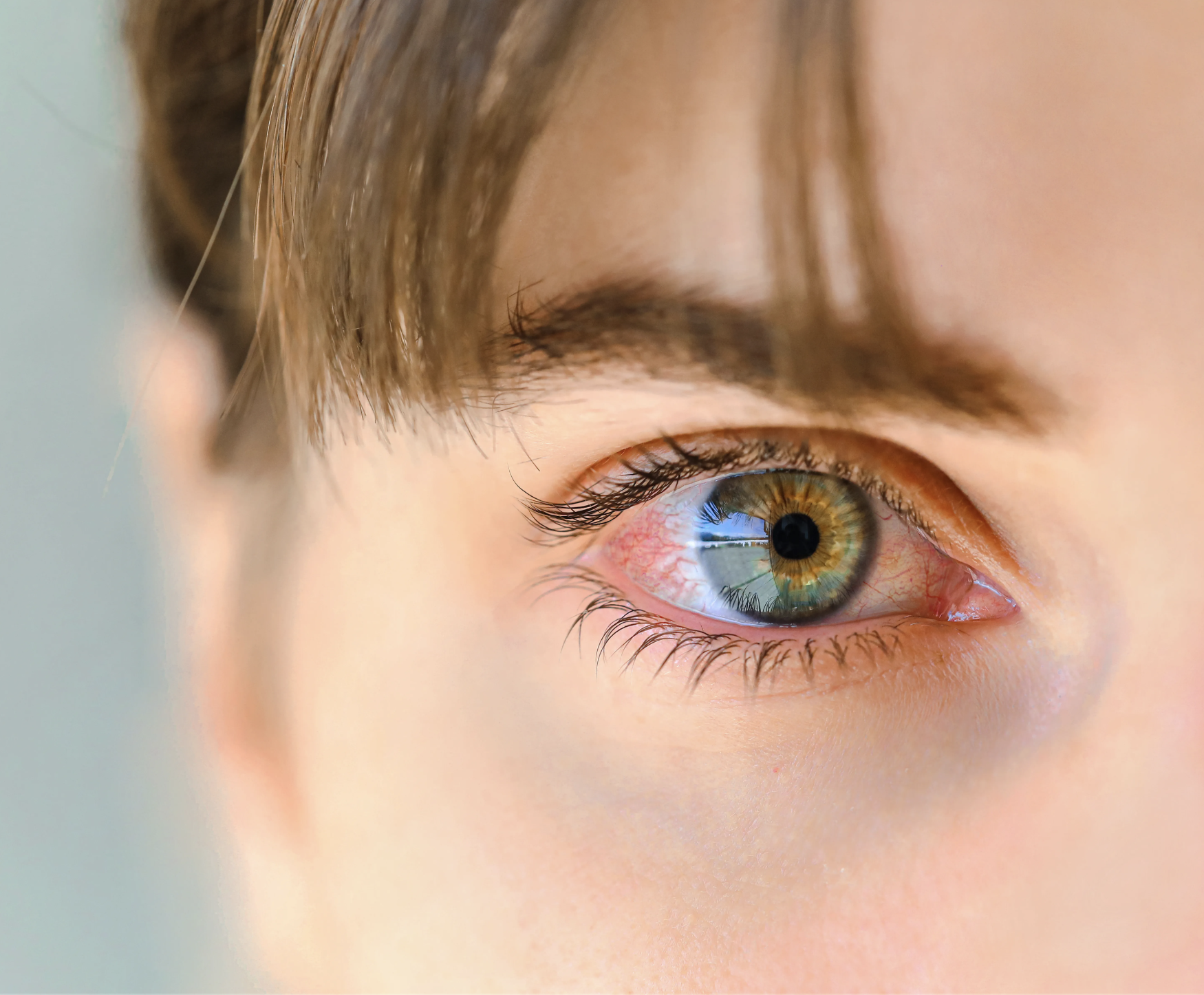
Red, glossy eyes are one of the most recognizable effects associated with cannabis use. Someone consumes marijuana, and shortly afterward, the whites of their eyes may appear pink or bloodshot. This reaction is so familiar that people often associate red eyes with being high.
But why does weed make eyes red, and does this change mean something is wrong?
The main explanation involves tetrahydrocannabinol (THC), the intoxicating compound in cannabis. THC can influence blood vessels and circulation, making the tiny vessels on the eye's surface more noticeable. Dryness and smoke irritation may also contribute.
Although cannabis-related redness is often temporary, understanding its causes can help you recognize normal effects, manage discomfort, and identify symptoms that require medical attention.
The Science Behind Red Eyes from Weed
Weed can make your eyes red because THC affects blood vessels, potentially causing them to widen through a process called vasodilation. This makes the small vessels on the white surface of the eyes more visible, creating a red or bloodshot appearance.
When THC enters the bloodstream, it interacts with the body's endocannabinoid system (ECS), which participates in regulating mood, appetite, pain signaling, and several other physiological functions.
One of THC's effects involves the cardiovascular system. THC can temporarily affect blood pressure and vascular responses, though these changes vary by individual.
The eyes contain many tiny blood vessels within the conjunctiva, the thin membrane covering the white part of the eye. When these vessels become more prominent, the eyes can appear pink or red.
While vasodilation is a commonly cited explanation for cannabis-related redness, the precise mechanisms are still being studied. The reaction should not be attributed to blood pressure changes alone.
How THC Affects Your Eyes
THC influences several bodily processes, including sensory perception and the response to certain stimuli.
This helps explain why cannabis can produce different noticeable effects.
For example, some people experience increased appetite because THC interacts with brain pathways involved in hunger and food reward. Our guide explaining why weed gives you the munchies explores this separate effect in more detail.
Red eyes may reflect changes in blood vessel appearance, but other factors can contribute.
Does Cannabis Cause Dry Eyes?
Cannabis use has also been associated with dry or irritated eyes.
Some research suggests cannabinoids may influence tear production and ocular surface function. However, evidence about these effects remains limited.
When the eyes lack sufficient lubrication, they may feel:
Dry or gritty
Slightly irritated
Uncomfortable when blinking
Sensitive to environmental conditions
More noticeably red
Smoke exposure can make these symptoms worse by irritating the eye's surface.
Therefore, cannabis-related redness may involve several overlapping factors rather than one isolated process.
Why Some People Get Red Eyes More Than Others
Not everyone experiences red eyes after consuming cannabis.
Some individuals notice visible redness almost every time, while others experience only mild changes or none at all.
Several factors may help explain these differences.
Individual Body Responses
Everyone responds differently to THC.
Genetics, metabolism, previous cannabis exposure, and individual sensitivity can influence the effects a person experiences.
These differences may explain why two people consuming similar products can react noticeably differently.
However, eye redness alone cannot reliably indicate how much THC someone has consumed or how impaired they are.
THC Concentration and Cannabis Composition
The THC concentration of a cannabis product can influence its overall effects.
Products with higher THC concentrations may produce more pronounced physiological effects, although a specific THC percentage cannot reliably predict eye redness.
Cannabis also contains other cannabinoids, including cannabidiol (CBD).
Understanding the cannabinoid information provided with different CBD products can help explain how CBD-containing formulations differ from THC-dominant products.
For readers exploring New Metro or searching for a weed dispensary in Bayside, reviewing labeled THC and CBD concentrations can help clarify product differences. However, those labels cannot predict whether a particular product will cause red eyes.
However, there is insufficient evidence that CBD consistently prevents THC-related eye redness.
Similarly, product labels such as indica, sativa, or hybrid are not reliable indicators of whether someone will develop bloodshot eyes.
Frequency of Cannabis Use
People who use cannabis frequently may develop tolerance to certain THC effects.
However, scientific evidence is insufficient to establish that regular cannabis use consistently reduces eye redness.
The reaction may still vary with product composition, exposure, and individual sensitivity.
Method of Consumption
How cannabis enters the body may also affect the experience.
Smoking introduces smoke and airborne particles that can irritate the eyes.
Edible products avoid direct smoke exposure, but THC absorbed through digestion can still produce redness.
For this reason, bloodshot eyes are not exclusive to smoking marijuana.
The presence or absence of red eyes also cannot reliably identify whether someone consumed cannabis through smoking, vaping, or edibles.
Should You Be Worried About Red Eyes After Smoking Weed?
In many cases, red eyes associated with cannabis use are temporary and improve as the effects wear off.
Mild redness without pain or vision changes may resolve without medical treatment.
However, not every case of red eyes should be attributed to cannabis.
Redness can also result from allergies, infections, contact lens irritation, dry eye disease, injuries, and more serious eye conditions.
Pay close attention when redness occurs alongside other symptoms.
Seek prompt medical attention if you experience:
Significant eye pain
Sudden blurred or reduced vision
Severe sensitivity to light
Persistent or worsening redness
Eye injury or chemical exposure
Unusual discharge or substantial swelling
Severe pain or sudden vision loss warrants urgent medical evaluation.
The American Academy of Ophthalmology recommends a professional assessment when redness persists or is accompanied by pain, vision changes, or other concerning symptoms.
Remember that cannabis can also impair visual processing, judgment, and coordination, even when your eyes do not appear red.
How Long Do Red Eyes Last?
Red eyes from weed may last for several hours, although there is no fixed duration that applies to everyone.
The timing depends on factors such as THC exposure, method of consumption, individual metabolism, and other causes of eye irritation.
For people who smoke cannabis, redness may appear relatively soon after THC begins producing noticeable effects.
As those effects decrease, the redness may gradually improve.
However, this pattern is not guaranteed.
Edible cannabis products can take approximately 30 minutes to two hours to produce noticeable intoxicating effects. Their effects may also last longer than those of inhaled cannabis.
This means eye redness associated with THC may persist for a longer period after consuming an edible.
Readers who want to understand the differences between cannabis formats can review available cannabis edibles and their labeled cannabinoid information. Product labels should not be used to predict an exact duration of eye redness.
If redness continues after the other noticeable effects of cannabis have resolved, another cause may be responsible.
Persistent symptoms should be assessed by an eye care professional.
How to Prevent or Minimize Red Eyes from Weed
There is no guaranteed method to prevent THC-related eye redness.
However, several practical approaches may help relieve mild irritation or reduce factors that make redness more noticeable.
Use Eye Drops
Eye drops commonly manage dry or red eyes, but choosing the right type matters.
There are two main categories to understand.
Lubricating eye drops: Also known as artificial tears, these help relieve dryness by adding moisture to the eye's surface.
Redness-relieving eye drops: Some contain medications that temporarily narrow surface blood vessels, reducing visible redness.
Although redness-relieving drops can work quickly, frequent use of certain products may cause rebound redness. This happens when the eyes become red again, sometimes more noticeably, after the medication wears off.
The American Academy of Ophthalmology recommends caution with redness-relieving drops and often favors preservative-free artificial tears for dryness-related symptoms.
Avoid using medicated redness-relief drops routinely without professional guidance, particularly if you have glaucoma or another eye condition.
Try Lower-THC Products
THC concentration is one factor that may influence the intensity of cannabis-related effects.
Reducing THC exposure may reduce certain unwanted effects for some individuals.
However, products marketed as high-CBD or low-THC are not guaranteed to prevent red eyes.
Cannabinoid composition is only one part of the overall response.
If cannabis regularly causes uncomfortable symptoms, reducing or avoiding THC exposure is more reliable than assuming a different strain will prevent the problem.
Hydrate Well
Staying adequately hydrated supports overall health and normal bodily functions.
Although drinking water is not a proven way to reverse THC-related vasodilation, it may help if you're thirsty or experiencing dry mouth.
For eye discomfort, appropriate lubricating drops may provide more direct relief than increasing water intake alone.
If your eyes frequently feel dry, consider discussing the symptoms with an eye care professional.
Consider the Effects of Different Consumption Methods
Smoking cannabis exposes the eyes to smoke, which may contribute to irritation.
Products consumed without combustion avoid direct cannabis smoke exposure, but this does not eliminate the effects of THC.
Edibles may still cause bloodshot eyes and have delayed, sometimes unpredictable effects.
Similarly, vaping is not risk-free. Cannabis vaping products can expose users to potentially harmful substances, and vaping has been associated with serious lung injuries.
Therefore, switching consumption methods should not be viewed as a guaranteed or medically recommended solution for red eyes.
For additional context about substances associated with smoking, read our article explaining whether weed contains nicotine.
Apply a Cold Compress
A cool compress may temporarily soothe mild eye irritation.
To use one, place a clean cloth dampened with cool water over your closed eyelids for a few minutes.
Avoid applying ice directly to your eyes or pressing firmly against them.
A cold compress may improve comfort, but it does not reverse the effects of THC in the bloodstream.
If redness is accompanied by pain, swelling, or changes in vision, seek medical advice rather than relying on home remedies.
Everyday Tips to Keep Your Eyes Comfortable
Small changes to your daily routine can help reduce general eye irritation.
Consider the following habits:
Avoid rubbing your eyes. Rubbing can worsen irritation and introduce bacteria.
Limit smoke exposure. Smoke and airborne particles can aggravate sensitive eyes.
Maintain comfortable indoor humidity. Very dry air can contribute to eye discomfort.
Take screen breaks. Extended screen use can reduce blinking and worsen dryness.
Follow contact lens hygiene guidelines. Remove lenses if they cause discomfort, and seek care for redness associated with pain.
Use eye products appropriately. Follow product directions and avoid sharing eye drops.
If your eyes remain irritated despite these measures, a professional eye examination can help identify other possible causes.
It's also important not to use the appearance of your eyes as a measure of whether cannabis-related impairment has ended.
Even after redness fades, attention, coordination, and reaction time may still be affected.
Avoid driving or operating machinery while impaired.
The Bigger Picture
Red eyes are a recognizable effect of cannabis, but they don't tell the whole story about how THC affects the body.
The reaction can involve vascular changes, eye surface irritation, and individual sensitivity.
For many people, temporary redness is mild. However, cannabis can also affect visual processing, attention, balance, and overall coordination.
Understanding these effects helps separate common observations from potentially misleading assumptions.
Not everyone who consumes cannabis develops bloodshot eyes, and not everyone with red eyes has consumed cannabis.
Eye redness should therefore be understood as a symptom with several possible causes, rather than a reliable indicator of cannabis use.
Frequently Asked Questions
Why does weed make your eyes red even if you don't smoke it?
THC can affect blood vessels after entering the bloodstream, regardless of how it is consumed. This means cannabis edibles may also cause red eyes. Smoking adds the possibility of irritation from smoke exposure, but smoke is not the only explanation.
How long do red eyes last after smoking weed?
Redness may last several hours, depending on THC exposure, individual sensitivity, and eye irritation. There is no fixed timeline. If symptoms persist, worsen, or involve pain or vision changes, seek medical advice.
Can cannabis edibles make your eyes red?
Yes. Cannabis edibles containing THC can cause red eyes because THC enters the bloodstream after digestion. Edibles can also produce delayed and longer-lasting effects compared with inhaled cannabis.
How can you get rid of red eyes from weed?
Mild redness may improve naturally as THC-related effects wear off. Artificial tears may help relieve dryness, while a cool compress can soothe mild irritation. Some medicated eye drops temporarily reduce redness, but frequent use of certain products can cause rebound redness.
Do high-THC strains cause more red eyes?
Higher THC exposure may increase the likelihood or intensity of some cannabis-related effects. However, research does not establish a precise relationship between THC percentage and eye redness. Individual sensitivity and other factors also matter.
Can CBD prevent red eyes caused by THC?
There is insufficient scientific evidence that CBD reliably prevents cannabis-related eye redness. Products containing less THC may produce different effects, but CBD should not be considered a proven treatment for bloodshot eyes.
Does weed cause permanent eye redness?
Cannabis-related redness is often temporary, but persistent redness should not automatically be attributed to THC. Other eye conditions, including allergies, infections, and dry eye disease, may require treatment.
Does drinking water help reduce red eyes from weed?
Drinking water supports hydration but does not directly reverse THC-related blood vessel changes. If your eyes feel dry, suitable artificial tears may be more helpful than drinking extra water alone.
Can you get red eyes from secondhand cannabis smoke?
Secondhand smoke may irritate the eyes and make them appear red. Exposure to THC may also occur in certain environments, particularly poorly ventilated spaces with heavy smoke. The effects depend on exposure conditions.
Are red eyes a reliable sign that someone is high?
No. Some cannabis users develop noticeable redness, while others do not. Allergies, fatigue, infections, and dry eye conditions can also cause bloodshot eyes. Redness cannot reliably determine whether someone has consumed cannabis or is currently impaired.
Final Thoughts
So, why does weed make eyes red? The most commonly discussed explanation involves THC-related changes in blood vessel activity, while dryness and smoke irritation may also contribute.
The reaction is often temporary, but its intensity and duration vary between individuals.
Simple measures such as avoiding eye irritants, using appropriate lubricating drops, and monitoring persistent symptoms can help support eye comfort.
Most importantly, don't assume every case of red eyes is harmless or caused by marijuana.
If you experience ongoing redness, pain, or vision changes, consult an eye care professional.
If you are looking for a weed dispensary near Bayside, explore New Metro on Google Maps to find our store location, check directions, and plan your visit.